

In Virginia, it is indeed possible to sell a car even if there is still an auto loan on the vehicle. The lien has to be cleared before the new owner can be given a clear title.
If you have auto financing for your vehicle, the ownership is yours, but the lender has a security interest in the car. According to the Virginia DMV, the lien denotes the existence of a legal claim over an asset, which ensures its repayment. As long as the lien is valid, you are not able to transfer a clear title to the purchaser.

Virginia law also puts certain requirements on the transfer process itself. A vehicle owner transferring their interest in the vehicle must duly sign the assignment and warranty of title and must also reveal any existing liens that may be in place against the vehicle before delivering the certificate of title to the buyer. Generally speaking, it is illegal in Virginia to sell, exchange, or trade a vehicle unless you have or legally possess a certificate of title.
You may sell a vehicle in Virginia even if it has a loan, provided the lender’s lien is settled and canceled before giving the buyer the automobile’s title. Learn how classifying your sale as a private transaction, making a trade-in with the car dealer, getting the payoff amount, managing negative equity, and transferring the title in Virginia works for you.
This does not necessarily mean you must pay off the loan weeks before advertising the car. The critical issue is having a reliable transaction plan under which the lender receives the payoff, releases its lien and allows the title to be transferred. Common approaches include:
- You have the option to turn in your vehicle to a car dealer, since the dealership typically pays any amount owed directly to the bank. Alternatively, you can sell the car through a company that handles automobile purchases and also settles your liens.
- Selling privately by obtaining payoff instructions from the lender and doing so at a local bank branch or credit union is also an option. You must pay off your loan before you receive a lien release on your vehicle and an updated title.
Negative equity arises when the balance owed on your loan is greater than the cash you receive from a sale of the asset. You must pay off some of the loan amount yourself or secure alternative financing through a lender. It is always important to analyze your situation before agreeing to any deals. According to Edmunds reports, negative equity is increasingly common; it reports that 30.9% of trade-ins toward new-vehicle purchases in the first quarter of 2026 had negative equity.
Here’s a Quick Visual Breakdown of How to Sell a Car With Money Owed On It
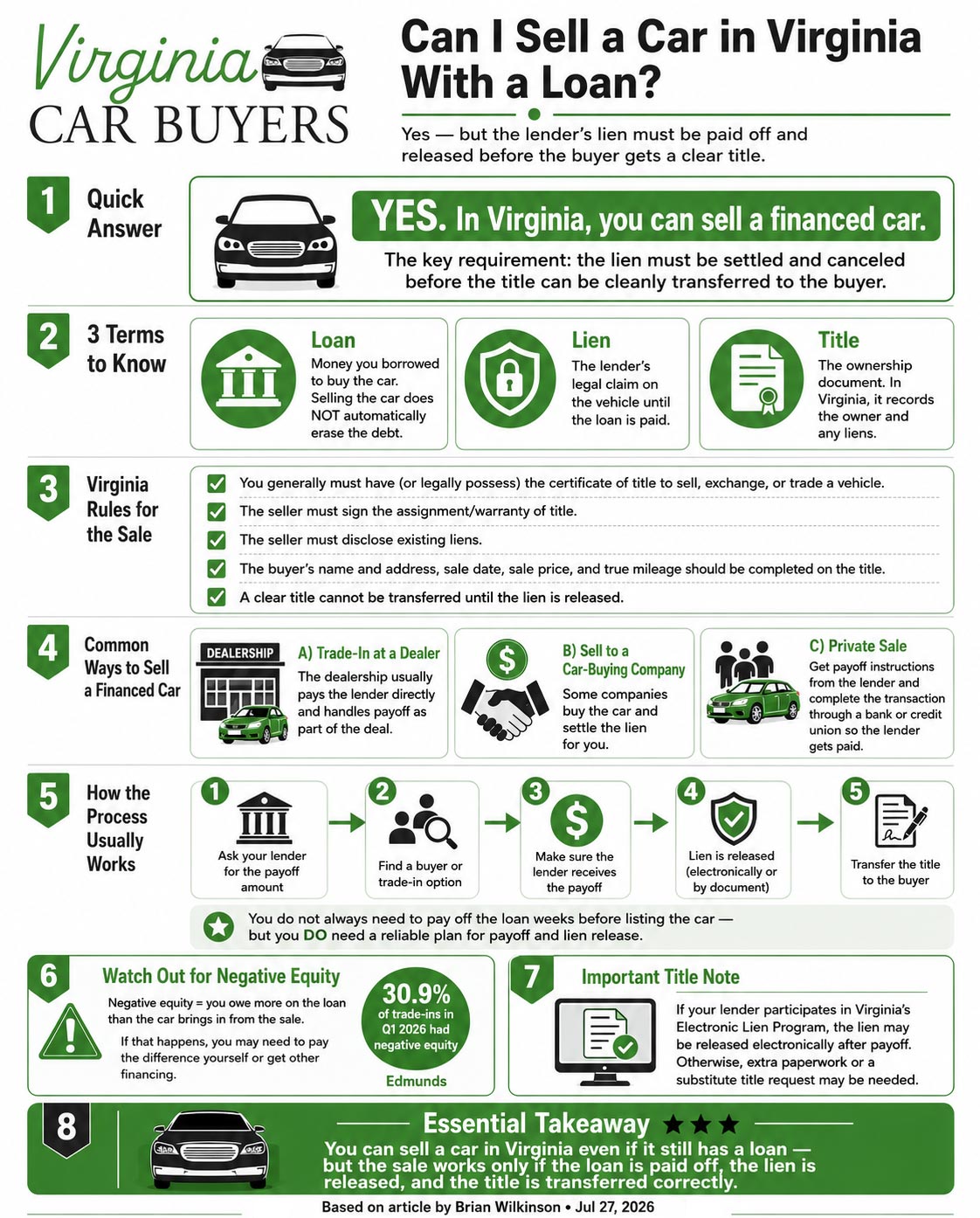
How Does a Loan, Lien or Title Come Into Play When Selling a Vehicle in Virginia?
Your agreement for the car loan makes you responsible for the repayment of the money borrowed to buy the vehicle. Unless you take some action, selling the vehicle will not free you from that responsibility.
The lien consists of an encumbrance on the property, which secures repayment to the creditor. In this sense, the lien serves the purpose of the creditor’s protection and provides rights over the property if the borrower defaults. Moreover, it is necessary to say that, in terms of car purchases, the lien means that a buyer may not simply pay the seller and receive a clear title in return.
The certificate of title is an important legal document that identifies its owner and records any liens associated with the title. Moreover, the certificate of title in Virginia includes the section associated with the transfer of ownership.
In a common private sale, the required owners mentioned in the title should sign it. The seller should put the name and address of the buyer and write the true mileage of the vehicle, as well as the sale price and date of the deal, and hand over the correctly transferred title to the buyer.

If a lender is a participant in the Electronic Lien Program in Virginia, then it is able to release the lien electronically upon payment. If the lender does not participate in the process, then additional documents or a substitute title request may be necessary.
Essential fact: You can sell a financed vehicle, but it is difficult to sell that vehicle if you are unable to pay off the amount you owe under the loan, have the lien lifted, and transfer the vehicle title correctly.